
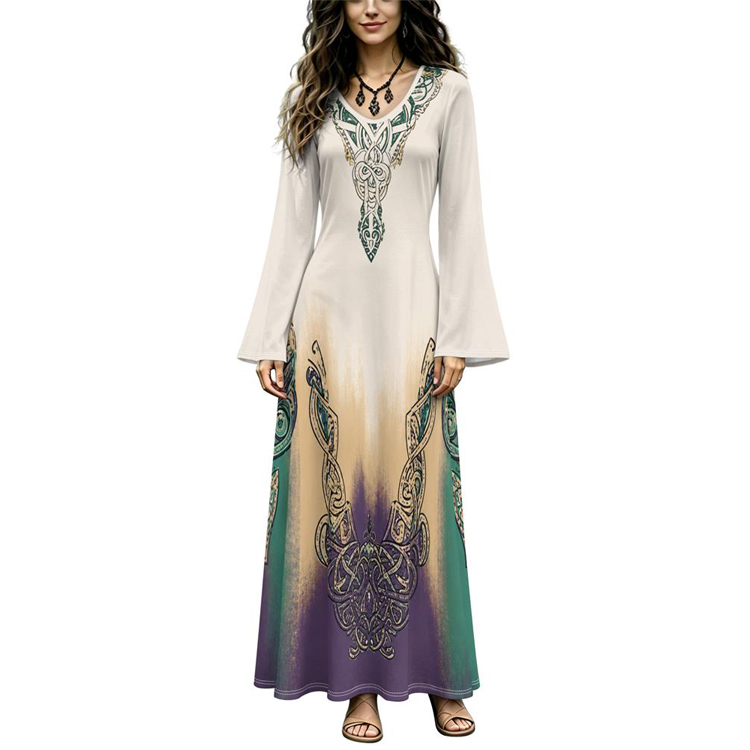
SKC59 Dress RFQs: Define the Hem Construction
For an SKC59 maxi dress hem enquiry, ask the supplier to define the lower-edge construction on the actual garment version offered. Request marked front and back references, the applicable edge-finish description and a sample detail linked to the order. Keep the hem construction separate from overall garment length, printed artwork and fit terminology. A catalogue model image helps identify the style but cannot establish a stitch type, seam allowance or confirmed manufacturing method.
Supplier-published catalogue reference. Styled props and advertising statements do not establish commercial inclusions, a construction detail or an independently verified performance result.
Identify the SKC59 version behind the enquiry
Pinshun publishes the SKC59 Women’s V-Neck Waist-Cinched Bell-Sleeve Maxi Dress with a printed design and a flowing lower silhouette in its catalogue presentation. The listing identifies polyester and describes an all-over print. Use those details to locate the style under discussion. Do not infer the actual lower-edge sewing construction or production measurements from the way a styled catalogue image presents the garment.
Link the official SKC59 dress page to the supplier offer. Ask which garment revision, size reference and printed version the response covers. The same style name may be used throughout a discussion while a sample or proposed construction changes. A durable version reference lets a buyer connect the supplier explanation to the exact dress rather than a general maxi-dress description.
Mark the lower edge before discussing its finish
Request a marked front and back view identifying the hem region under review. Ask whether the proposed lower-edge treatment is the same around the garment or whether any locations require separate descriptions. Let the supplier identify relevant joins or changes in the edge arrangement. Do not invent panel seams, vents or other details simply because those features can appear on other dresses.
Keep the physical edge construction distinct from the printed design near it. The location of a printed motif or colour change does not define where a folded edge, seam or stitching line sits. If the supplier supplies a construction drawing, retain its labels and revision. Ask it to explain any difference between the drawing and an identified sample rather than resolving an unclear edge detail by scaling a catalogue photograph.
Supplier-published catalogue reference. Styled props and advertising statements do not establish commercial inclusions, a construction detail or an independently verified performance result.
Request the supplier construction description
Ask the manufacturer to name the offered edge finish and provide an appropriate close detail or construction reference. If it uses a particular sewing term, keep that term in the response and ask what region it describes. The buyer should not prescribe an assumed stitch method as though it were already a feature of SKC59. Request dimensions or tolerances only where they are actually needed and have the supplier define their reference points.
Separate a proposed construction from a sample observation. The supplier may explain its standard version or propose an alternative, but the order record needs to state which version the quotation covers. Where the construction is still being discussed, mark it as pending. A broad statement that a garment is suitable for a style or occasion does not replace a clear lower-edge specification tied to the offered dress.
Buying field
Requested supplier response
Style identity
SKC59 and supplier offer revision
Garment reference
Actual size, print and sample version
Region map
Marked front and back lower-edge references
Construction
Supplier-named edge finish and supporting detail
Measurements
Defined attributes and endpoints when requested
Sample review
Identified physical sample and unresolved questions
Revision control
Confirmed changes linked to affected order lines
Review a sample without inventing test results
When a sample is supplied, identify its version before recording the visible lower-edge construction. Use close views of the relevant regions and keep the orientation clear. A front image and a back image can support a location record, while a construction detail answers the more specific question of how that edge is made. Do not assume that a model image reveals the inside of the hem or proves that every garment has the same finish.
If the buyer requires a specific evaluation of seam behaviour or finished-garment care, define it separately with the responsible parties. Retain any actual result with the sample and method it covers. A construction description alone does not establish durability, resistance to fraying, wash performance or a guaranteed appearance after use. Keep such claims out of the order summary unless the relevant scope and evidence are actually available.
Supplier-published catalogue reference. Styled props and advertising statements do not establish commercial inclusions, a construction detail or an independently verified performance result.
Carry the approved edge reference into the order
Retain the supplier construction description, marked region map and reviewed sample reference together. If the supplier proposes a later change to the edge treatment, request a revised description and identify the affected style or order lines. An unchanged style code should not silently authorise a different finish. Equally, a buyer change to printed artwork should not automatically be treated as approval of a changed physical edge construction.
At receipt, describe differences against the agreed reference: an unexplained construction change, a different location treatment or an observed condition concern. Keep those observations separate from overall length and fit questions. This gives the supplier a precise issue to address without claiming that the catalogue shows an unlisted sewing method or that a visual review establishes a performance result. The goal is a clear, version-specific purchasing record for the actual offered SKC59 dress.
Buyer FAQ
Can the hem stitch be identified from the model image?
Not reliably. Request a supplier construction description and an appropriate close detail for the actual offered version.
Is hem construction the same as the printed border?
No. A printed appearance and the physical edge finish are different references. Keep them linked to the same garment version but describe them separately.
Does an approved sample prove wash durability?
No. A sample review identifies the version and features reviewed. Any required care or durability evaluation needs its own defined scope and actual result.
Supplier response checklist
Exact offered product, component and version references
Supplier-marked description and identified sample scope
Confirmed statements separated from pending questions
wholesale women’s clothingB2B supplier sample record