
POD Garment Care: Confirm the Printed Version
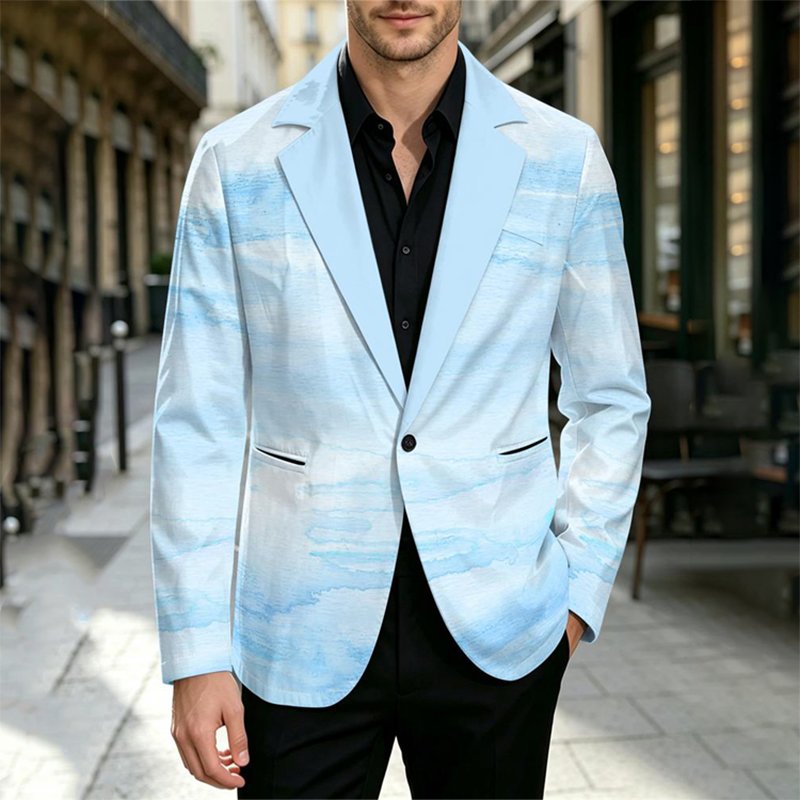
Separate Suit Set gallery appearance. The photograph does not display a care label or establish a wash-test result.
For a print-on-demand garment enquiry, ask which exact product and printed version a care statement covers. Keep any qualification in the supplier’s wording. Pinshun’s APF01 apron page says “Machine washable for digital print styles,” while the TKA07 jacket and Suit Set pages use an unqualified Machine washable care entry. These are catalogue statements to clarify with the supplier, not independently verified wash results.
For wholesale novelty wear purchasing, this is a version-control question with a practical purpose. The care reference supplied with the order should belong to the merchandise actually being offered. A buyer should not remove the digital-print qualifier from APF01 or transfer a care statement between different garments simply because all three pages declare polyester.
Retain the APF01 qualifier
Use the APF01 Halter Neck Back-Tie Apron page in the enquiry. Its care field explicitly refers to digital print styles. Ask the supplier to identify whether the current apron proposal belongs to that stated version and which care information accompanies it. Keep the qualifier visible in the purchasing record.
The same page lists Pattern: Custom and Print Type: All-Over Print. Those fields describe the catalogue offering, but they do not by themselves identify the printing process used for every proposed version. Request the supplier’s exact version description rather than treating all-over placement as proof of one production method.
Keep jacket and suit records separate
The TKA07 Plus-Size Men’s Outdoor Jacket page and the Suit Set page each list Machine washable in their care fields. Retain those entries with the corresponding products. Ask the supplier for the current care reference attached to its actual offered construction and printed version.
Both pages also declare 100% Polyester. That composition statement does not supply a detailed laundering programme or establish identical care instructions across the garments. Keep composition, print version and the supplier’s care reference as separate fields so that a change in one remains visible.
Product
Retained care wording
Supplier confirmation requested
APF01 apron
Machine washable for digital print styles
Does the selected version fall within that qualifier?
TKA07 jacket
Machine washable
Which detailed care reference covers the offered jacket?
Suit Set listing
Machine washable
Which garment members and printed versions does the reference cover?
APF01 apron catalogue appearances. The page qualifies its care wording by digital-print styles; the display does not define a supplied pair or a wash process.
Request the actual care reference
Ask the supplier to provide the wording or label reference proposed for the selected merchandise. Record its identifier or revision and the exact product description it covers. If several garments are ordered together, keep a separate record for each one unless the supplier expressly identifies a shared reference and its scope.
Where the available care entry is only a short catalogue phrase, request the additional instructions needed for the buyer’s order documentation. Do not fill the gaps with an assumed temperature, detergent, drying method or programme. Those details are not provided by the retained catalogue wording used here.
Keep changes in print and construction visible
If a different print process or garment construction is proposed during sampling, ask whether the care reference changes. Identify the alternative on its own row rather than silently retaining the earlier label. This is particularly relevant when a catalogue phrase names a subset of styles, as the APF01 entry does.
Name the exact product and supplier-described printed version.
Retain any qualifying words in the catalogue care entry.
Link the offered care reference to the sample and quotation revision.
A supplier statement and a completed evaluation remain different evidence types. If the buyer requires supporting care-performance evidence, ask what evidence relates to the exact offered version. Do not treat a material declaration, catalogue image or short care phrase as a completed colourfastness or wash-durability test.
Carry the reference into order documentation
Ask the supplier to identify the agreed care reference in the quotation or attached specification. Confirm how the information will be associated with the proposed merchandise, such as an identified label or other expressly agreed document. These are supply questions to resolve, not an assumption that a particular label service is included.
Send the product and version references through the Pinshun enquiry channel. Keep the supplier’s reply with the sample record so purchasing can trace a care statement back to the actual printed garment. The goal is a clear documentation match, without inventing instructions or extending one product’s wording to another.
TKA07 jacket catalogue reference. Its appearance and polyester declaration do not independently verify care performance or identify a printing method.
FAQ
Does the APF01 entry cover every possible printed style?
Its retained wording specifies digital print styles. Ask the supplier whether the selected proposal falls within that scope.
Does All-Over Print identify the printing process?
Do not infer a process from that field alone. Request the supplier’s version description for the current offer.
Can a polyester declaration replace detailed care instructions?
No. Keep the declared composition and the product-specific care reference in separate purchasing fields.
What should accompany the offered care reference?
Retain the exact garment, printed version, sample identifier, care wording and document revision together.
Wholesale Novelty WearPOD Garment CarePrinted Version Reference