
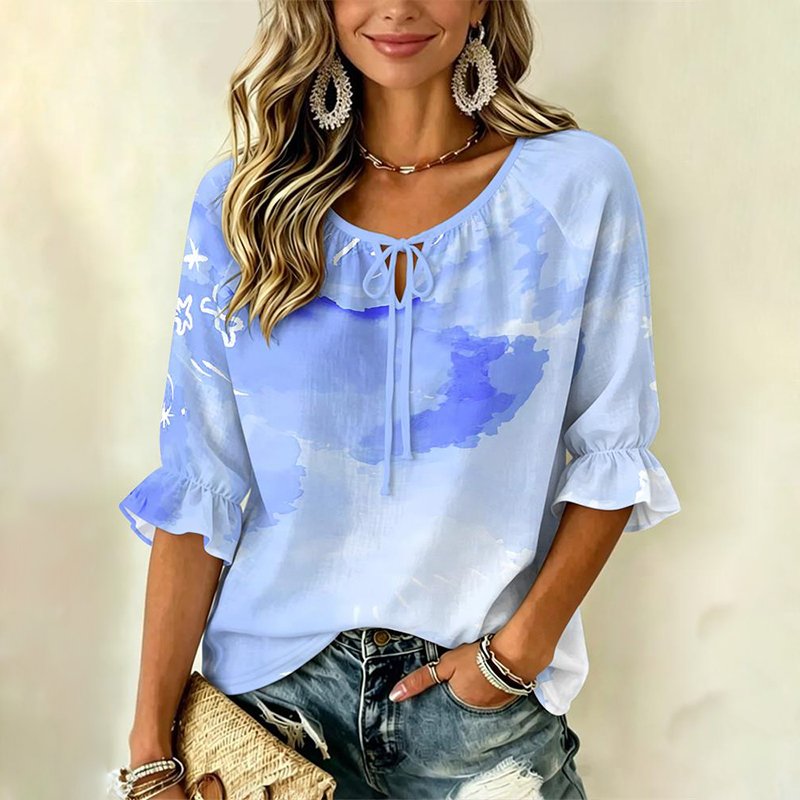
TKC14 Blouse RFQs: Define the Neck Opening
For a TKC14 blouse RFQ, describe the round neckline and the small drawstring V-opening as connected but separate features. Ask for a supplier-marked neckline reference, the intended tie presentation and measurement points for the offered size. This gives a wholesale women’s clothing buyer a specific sample decision: whether the submitted opening matches the agreed design, rather than whether a photograph simply looks similar.
TKC14 catalogue appearance shows the blouse neckline and tied centre detail. Jewellery, bag and shorts are styling items; no dimensions or supplied accessories are established.
Read the two neckline descriptions together
The TKC14 Women’s Drawstring Neck Blouse page lists “Round Neck” in its neckline field. Its description also names a drawstring small V-opening. Retain both statements in the enquiry. Treating these as mutually exclusive choices would discard part of the supplier’s own product description.
Begin the specification with the model reference and an annotated front image. Mark the curved neckline, the centre opening and the visible ties individually. Ask the supplier to identify the corresponding construction on its proposed sample. The response should make clear which description concerns the outer neckline and which concerns the opening below it.
Request a drawing that answers the buying question
A useful supplier submission shows where the opening starts and ends, how the tie relates to it and where the surrounding neckline is measured. Ask for a front sketch or marked sample photograph with those points identified. Keep the reference in the sample file so purchasing and garment development discuss the same locations.
Name each requested dimension rather than sending an isolated width or depth value. For example, ask the supplier to define its neckline-width endpoints, centre-opening depth endpoints and any relevant tie measurement. These are proposed specification fields, not published TKC14 dimensions. Obtain the supplier’s stated measurement method before comparing measurements between samples.
Record field
What the supplier should return
Model and size
TKC14, offered size reference and sample revision
Round neckline
Marked outer contour and agreed width endpoints
Small V-opening
Marked start/end points and declared depth basis
Drawstring or ties
Construction description and presentation for review
Sample decision
Accepted reference, requested change or unresolved point
APF01 is a separate apron model. Its halter/back-tie wording is not the construction specification for the TKC14 blouse.
State the presentation used for measurements
Specify whether the sample reference shows the ties loose, arranged for display or tied in the supplier’s intended presentation. A knot and draped ends can obscure the centre opening in a photograph. Request a second view when the supplier’s submitted image does not show the feature clearly enough for the buyer’s decision.
Keep the garment position consistent within a comparison. Ask whether the supplier measured the sample flat and how it arranged the neckline before recording the result. If the buyer and supplier use different presentations, reconcile them before recording a discrepancy. Do not convert the model image into a garment measurement or assume that changing the tie position provides a confirmed adjustment range.
Keep sleeve and print comments on separate lines
The same page describes three-quarter ruffled bell sleeves, a relaxed raglan fit and an all-over print. Include those descriptors when identifying the product version, but keep their review comments separate from the neckline decision. A buyer can accept an opening reference while still asking about sleeve details without issuing an ambiguous approval for the complete garment.
For a change request, identify the feature, the marked reference and the requested result. “Revise centre opening to the annotated proposal” is more usable than “make the blouse better.” If artwork is also changing, give that artwork its own reference. A neckline decision should not silently approve a different printed design or transfer an approval from another garment.
TKA07 is a separate hooded jacket reference. Its neckline, fit and product declarations must not be transferred to TKC14.
Turn supplier replies into a usable sample record
Use one row per offered size or construction version when the supplier proposes different opening details. Attach the submitted sketch or sample image to that row and retain the supplier’s explanation. Record the buyer’s decision beside the specific revision, leaving unanswered dimensions visibly open rather than copying values from an unrelated blouse.
The catalogue declares polyester, 100% polyester composition and non-stretch fabric. Those are supplier descriptions for product identification; the catalogue image supplies no measured opening, fibre test or functional result. Keep any additional material or performance request in a separate supplier-confirmation field, and avoid turning the neckline record into an unsupported product guarantee.
Send a focused TKC14 enquiry
A concise request can say: “Please identify the round neckline and small V-opening on the offered TKC14 sample. Return a marked front reference, your measurement endpoints, the sample size and the tie presentation used. Confirm any construction difference from the catalogue reference, then identify the revised sample if a change is proposed.”
Before approving the sample, check that the model, size, feature labels and supplier reply refer to the same version. Keep the accepted drawing with the offer so a later discussion about the opening starts from that reference. This preserves the buyer’s actual decision without adding a current price, minimum quantity, production method or delivery promise to the product description.
Buyer FAQ
Is TKC14 round neck or V-neck?
The page lists Round Neck and describes a drawstring small V-opening. Carry both descriptions into the marked sample reference instead of replacing one with the other.
Can the opening depth be taken from the image?
Use the image to identify the feature. Request dimensions, endpoints, size and sample presentation from the supplier before making a dimensional comparison.
Does a tied neckline confirm an adjustable fit?
The image shows ties, but it does not establish an adjustment range or fit result. Ask the supplier to describe the offered construction and confirm the reference used for approval.
Keep TKC14 model, size and revision together.
Record neckline contour and centre opening separately.
Return the buying decision against the marked supplier submission.
wholesale women’s clothingTKC14 neckline referenceB2B sample specification